Wedding Planning
How to Make a Wedding Seating Chart (Step by Step, Without the Meltdown)
When to start your seating chart, how many guests fit per table, how to handle divorced parents and late RSVPs, and the order professional planners actually work in.
Colara · July 23, 2026
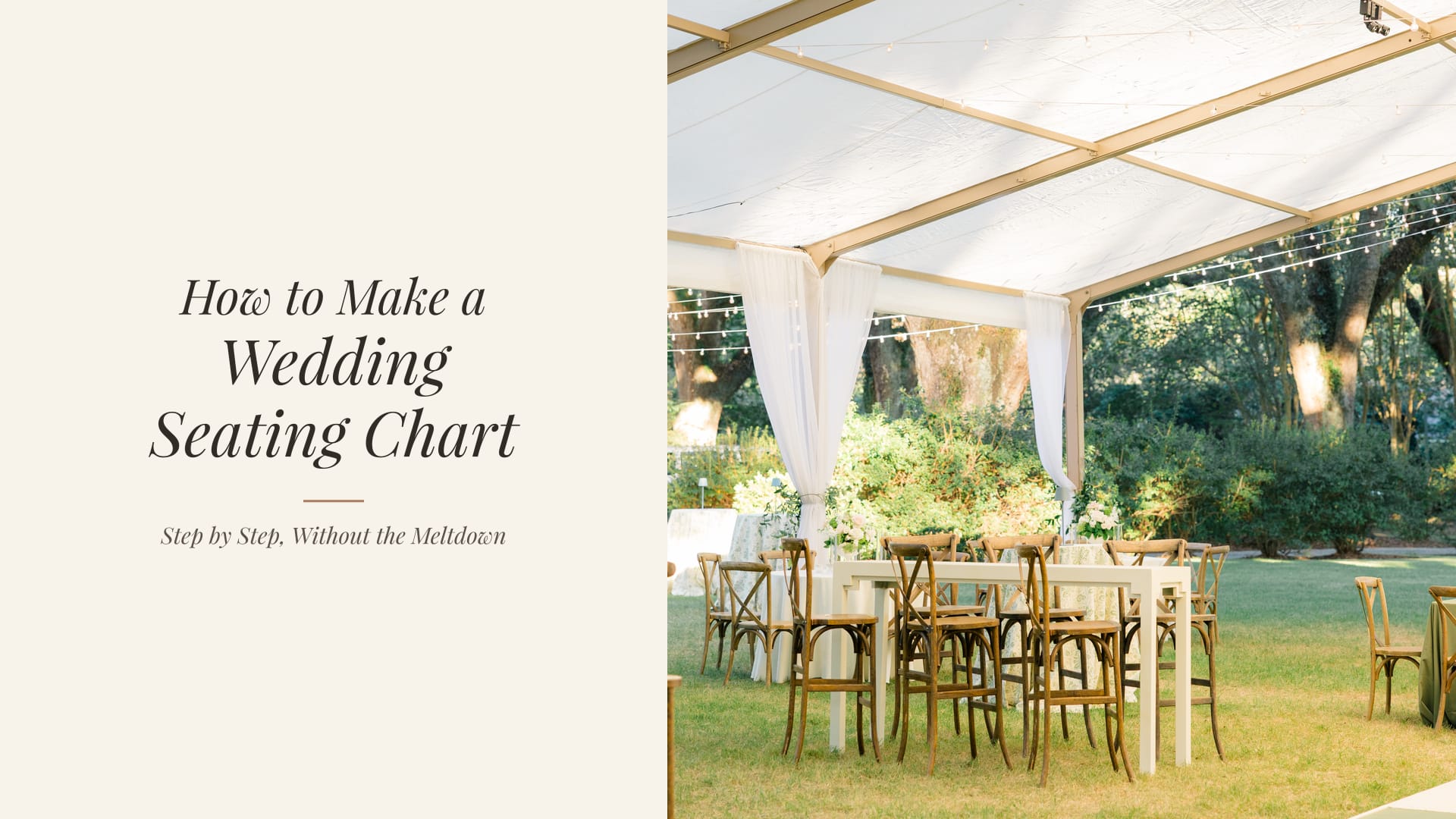
The seating chart is famously the task couples put off longest, and for good reason: it cannot really be finished until RSVPs are in, it involves every family dynamic you have been politely ignoring, and one late "actually, plus one?" text can unravel three tables at once.
Here is the process that keeps it manageable, the same order professional planners use, plus honest answers to the questions that actually cause the arguments.
When to start (and when to actually do it)
Start thinking about table count when you book the venue, because the room dictates everything: how many tables fit, where the dance floor goes, which seats have their backs to the couple.
But do not assign actual seats until your RSVP deadline passes, usually three to four weeks before the wedding. Any chart made before that is a rough draft you will redo. The realistic timeline:
- At booking: get the venue floor plan and maximum table count
- 2 to 3 months out: decide table shape and size, sketch the room layout
- RSVP deadline (3 to 4 weeks out): assign guests to tables
- 1 week out: final adjustments for late responses, send the chart to your venue, caterer, and stationer
Step 1: Know your table math
Standard capacities, so you can figure out table count from your guest list:
- 60-inch round: 8 guests comfortably, 10 maximum
- 8-foot rectangle: 8 to 10 guests
- Square: 8 guests
- Long banquet/family style: figure roughly 2 feet per guest
A 120-guest wedding is about 15 round tables of 8, or 12 tables if you push to 10. Under-fill rather than over-fill: eight chairs at a 60-inch round is dinner, ten is elbows.
Step 2: Lay out the room before you seat anyone
Place the head table, dance floor, bar, and DJ first. Then place guest tables. This ordering matters because the "good" tables are defined by what they are near: close to the couple, not next to the speakers, not in the server path from the kitchen.
Rank the tables best-to-worst in your head before assigning people. That ranking is the seating chart; everything after is sorting.
Step 3: Sort guests into groups, then groups into tables
Do not seat individuals. Sort your list into natural clusters first: college friends, work friends, each side's aunts and uncles, parents' friends. Most clusters are already roughly table-sized, and the chart mostly assembles itself.
The leftovers, the odd singles and lone plus-ones, are the real work. The kind move is seating them with the most social full table you have, not together at a "miscellaneous" table by the kitchen door.
Step 4: Handle the hard cases directly
- Divorced parents: equal-quality tables, comfortable distance, both with clear sightlines to you. Do not put them at one "parents" table unless they have told you they are fine with it.
- Kids: either a kids' table adjacent to their parents' tables, or seats with their parents. Split by age: a kids' table works for 6 to 12 year olds, not toddlers.
- Assigned tables vs. assigned seats: assigning tables only is completely fine and far easier. Assign specific seats only for plated dinners where the caterer needs meal choices mapped to chairs.
- The couple: sweetheart table if you want any chance of eating; head table if being surrounded by your people matters more than the meal.
Step 5: Expect it to change, so build it somewhere that can
The chart will change after you "finish" it. Someone cancels Wednesday, a plus-one materializes Thursday. If the chart lives on a poster board or a locked-down spreadsheet, every change is a redo.
This is exactly why we built our free wedding seating chart maker. It starts from your real guest list, so RSVPs and the chart stay in sync. You drag tables around an actual room layout, drop guests onto seats, and when someone cancels you drag their card off and slide someone over. Then share the live chart with your planner, caterer, and venue instead of emailing version 7 of a PDF.
Make your seating chart free →
FAQ
How long does a wedding seating chart take?
With guest groups sorted ahead of time, most couples finish the first real pass in one evening, then spend 15 minutes a week adjusting as stragglers respond.
Do you have to have a seating chart at a wedding?
For a plated dinner, effectively yes. For buffet or cocktail-style receptions under about 75 guests, open seating can work, though even then, reserved family tables prevent the awkward scramble.
Which side does each family sit on?
Tradition puts the couple's respective families on opposite sides, but almost nobody enforces this at receptions anymore. Seat people where they will have the best night.
How many guests per table at a wedding?
Eight comfortably at a standard 60-inch round, ten at most. Rectangles seat 8 to 10 depending on length.