For Planners
How to Become a Wedding Planner: A Realistic Guide for 2026
No certification required, but reps, contracts, insurance, and pricing are. The realistic path from assisting to your first three paying clients.
Colara · July 6, 2026
Nobody grows up practicing wedding planning the way people practice photography or baking. You discover you are good at it sideways: you ran your sister's wedding day from a clipboard, everyone kept asking who the coordinator was, and something clicked. If that is roughly your story, the question of how to become a wedding planner is really three questions: how to learn the craft, how to make it legal, and how to get someone to pay you. Here is the realistic version of all three.
What the job actually is
Wedding planning is logistics wrapped in emotional labor. The visible part is design boards and venue tours. The invisible part, which is most of it, is vendor contracts, payment schedules, timeline math, family diplomacy, and staying calm at 4pm when the cake is late. If the invisible part sounds energizing rather than draining, you are in the right place.
Step one: learn on someone else's weddings
You do not need a certification to call yourself a wedding planner. No state requires one. What you need is reps, and the fastest way to get them is assisting an established planner for a season. Offer to work their weddings as day-of help. You will learn more from one twelve hour Saturday, watching how a professional handles a collapsed timeline, than from any course. Courses have their place for the paperwork side, contracts, insurance, and budgeting, but they cannot teach you what a wedding feels like from the service entrance.
Step two: make it a business before you book a stranger
Before the first paying client who is not a friend, you want four things in place. An LLC, so your personal savings are separated from your business liability. General liability insurance, which many venues require before they let you work. A real contract, reviewed once by a lawyer, covering scope, payment schedule, and cancellation. And a separate bank account, because tax season arrives for everyone. None of this is glamorous and all of it is cheaper than one uninsured mistake.
Step three: your first three clients
Your first wedding will probably be for someone you know, at a discount, and that is fine. Treat it like a full price client: full contract, full timeline, full follow-through, and professional photos of your work from the day. Those photos and that testimonial are your portfolio. From there, the referral engine in this industry is vendors, not couples. Photographers, venues, and caterers meet engaged couples before you do, and a planner who makes vendors' lives easier gets recommended forever. Run great weddings and be easy to work with; that is the whole marketing plan for year one.
Step four: price like a business, not a hobby
New planners underprice out of fear, then burn out serving too many weddings for too little. Start with day-of coordination, which typically runs $800 to $2,500, and learn what those weekends actually cost you before promising full service. When you are ready to build packages, our wedding planner pricing guide walks through the models and the math, and our day-of coordinator checklist shows the real scope of that starter tier.
Step five: set up systems before you need them
The difference between a planner with five weddings and a planner with twenty five is rarely talent. It is systems: where timelines live, how contracts get signed, how couples see their budget, how vendors get their schedules. Building those habits at wedding number two is easy. Retrofitting them at wedding number twenty is not. This is the problem Colara exists to solve for planners, one workspace where the timeline, budget, contracts, invoices, and the couple all live together, and it is worth setting up before the volume arrives, not after.
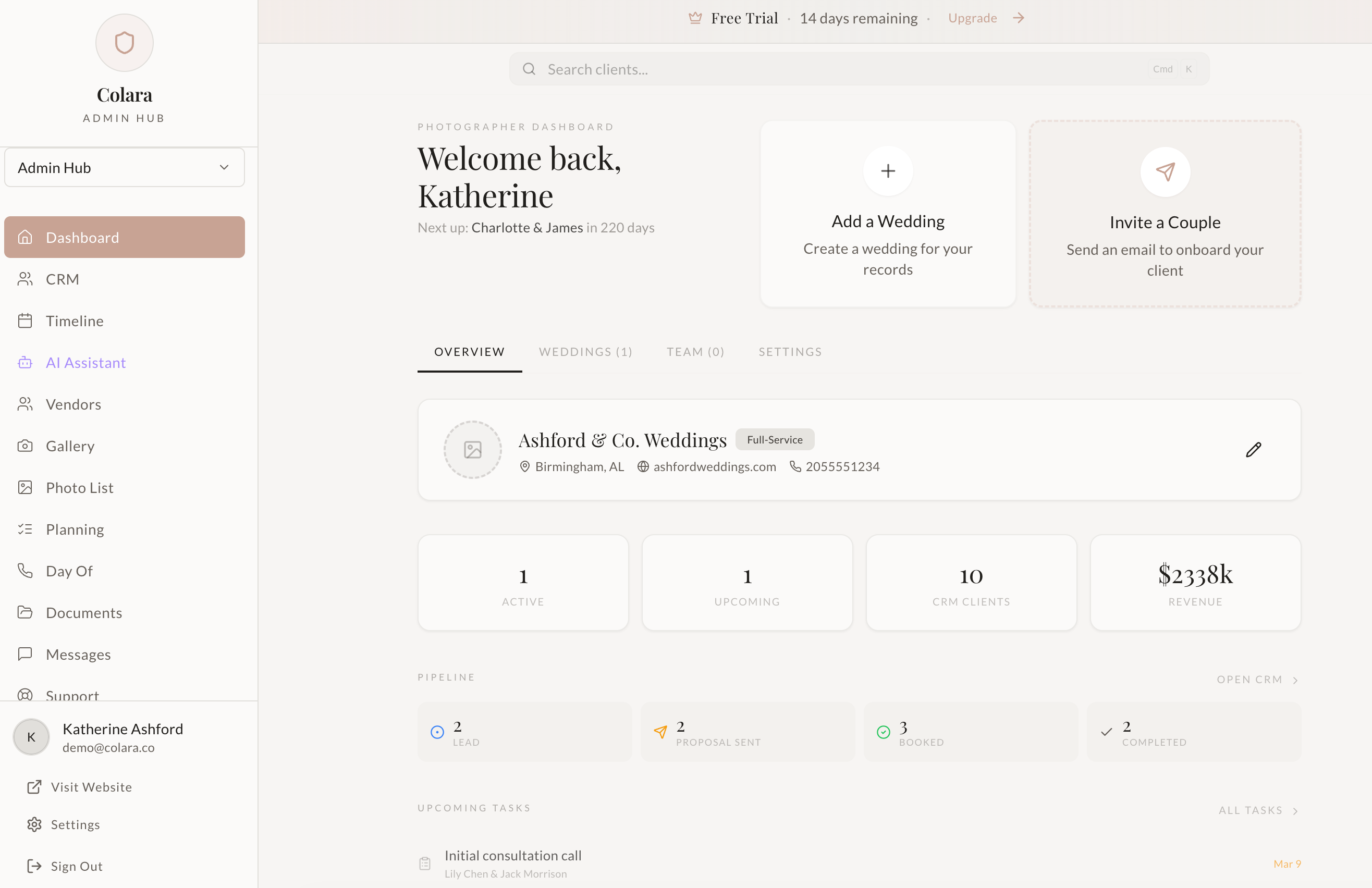
Run your whole business in one place
Timelines, clients, proposals, invoices, contracts, and payments. Colara is built for wedding planners, $99/month after a free trial.
Frequently asked questions
Do I need a certification to become a wedding planner?
No. No US state licenses wedding planners. Certifications can help you learn the business fundamentals and signal seriousness, but venues, vendors, and couples hire based on your work and referrals, not a certificate.
How much do wedding planners make?
A part time planner running day-of coordination might gross $10,000 to $25,000 a year. Established full service planners handling 15 to 25 weddings commonly gross $75,000 to $150,000 or more, depending heavily on market. Pricing structure matters as much as volume.
How long does it take to become a wedding planner?
One season of assisting plus one season of your own small client list is a realistic runway. Most planners who make it full time do so in year two or three, once vendor referrals compound.