For Planners
How Much Should You Charge as a Wedding Planner? A Pricing Guide for 2026
Most planner pricing starts as a guess. Here is what planners actually charge in 2026, the three pricing models, and the cost math that tells you your floor.
Colara · July 6, 2026

Ask ten wedding planners what they charge and you will get ten confident answers. Ask them how they arrived at the number and the room gets quiet. Most planner pricing starts as a guess, usually a low one, made in year one and never revisited. If you are booking every inquiry that comes through the door, that is not a sign your marketing is working. It is a sign your price is too low. Here is how to figure out how much to charge as a wedding planner in 2026, starting with what the market actually pays.
What planners actually charge in 2026
Industry surveys put the national average cost of a wedding planner around $2,100 to $4,000, but that average hides an enormous range. Day-of coordination typically runs $800 to $2,500. Partial planning lands between $2,300 and $6,000. Full service planning runs $4,500 to $12,000 and climbs well past that in major markets. Hourly rates start near $75 and reach $275 for experienced planners in high cost cities.
The spread is not random. It follows three things: your market's average wedding budget, your years of experience, and how much of the wedding you actually take off the couple's plate.
| Service level | Typical 2026 range | Typical hours per wedding |
|---|---|---|
| Day-of (month-of) coordination | $800 to $2,500 | 25 to 50 |
| Partial planning | $2,300 to $6,000 | 60 to 120 |
| Full service planning | $4,500 to $12,000+ | 150 to 300 |
| Hourly consulting | $75 to $275 per hour | as booked |
The three pricing models
Flat fee
One price for a defined scope. Couples love it because there are no surprises, and it rewards you for getting efficient. The risk is scope creep: without a clear contract, "one more vendor call" quietly turns a $3,500 package into $2,200 worth of effective hourly pay. Flat fee works when your scope language is airtight.
Percentage of budget
Typically 10 to 20 percent of total wedding spend. This model scales your fee with the complexity of the event, which is fair, since a $150,000 wedding is genuinely more work than a $40,000 one. It requires confidence to present and honest budget tracking to administer.
Hourly
Best reserved for consulting and partial planning. Pure hourly billing punishes you for experience: the faster you get, the less you make. If you use it, pair it with a minimum.
Price from your costs, not your fear
Here is the exercise most planners skip. Add up what a wedding actually costs you to produce: the hours (full service weddings routinely absorb 150 to 300 hours), your assistant's day rate, insurance, software, gas, the emergency kit you restock every season. Divide your revenue target by the number of weddings you can genuinely produce well in a year, usually 15 to 25 for a solo planner. That number is your floor. Most planners who do this math discover their current price is below their own floor, which explains why a full calendar can still feel like a failing business.
When to raise your price
Three reliable signals. You are booking more than 80 percent of consultations. Your calendar for next season is full before this season ends. Or your inquiries consistently describe budgets well above the weddings you are pricing for. Raise in steps of 10 to 20 percent, apply the new rate to new inquiries only, and tell your past couples nothing. Nobody renegotiates a wedding.
Packages that sell themselves
Three tiers, named plainly. Day-of coordination (which is really month-of, and your contract should say so; here is everything that tier actually covers), partial planning, and full service. Anchor the conversation with the full service package first, even if most couples choose the middle. The middle tier looks reasonable next to the top one, and couples who start at day-of upgrade more often than you would expect once they see what the next tier includes.
The quiet cost of running it all by hand
Every hour you spend rebuilding a timeline in a spreadsheet, chasing an unsigned contract, or re-entering the same couple's details into a third tool is an hour you cannot bill and cannot spend booking the next wedding. Planners switching to Colara consolidate timelines, contracts, invoices, budgets, seating, and client communication into one place, which is the difference between managing 18 weddings a year and managing 25 at the same level of care. If you are comparing tools, start with how Colara stacks up against HoneyBook, then look at pricing. Your price should reflect the caliber of your work. So should your systems.
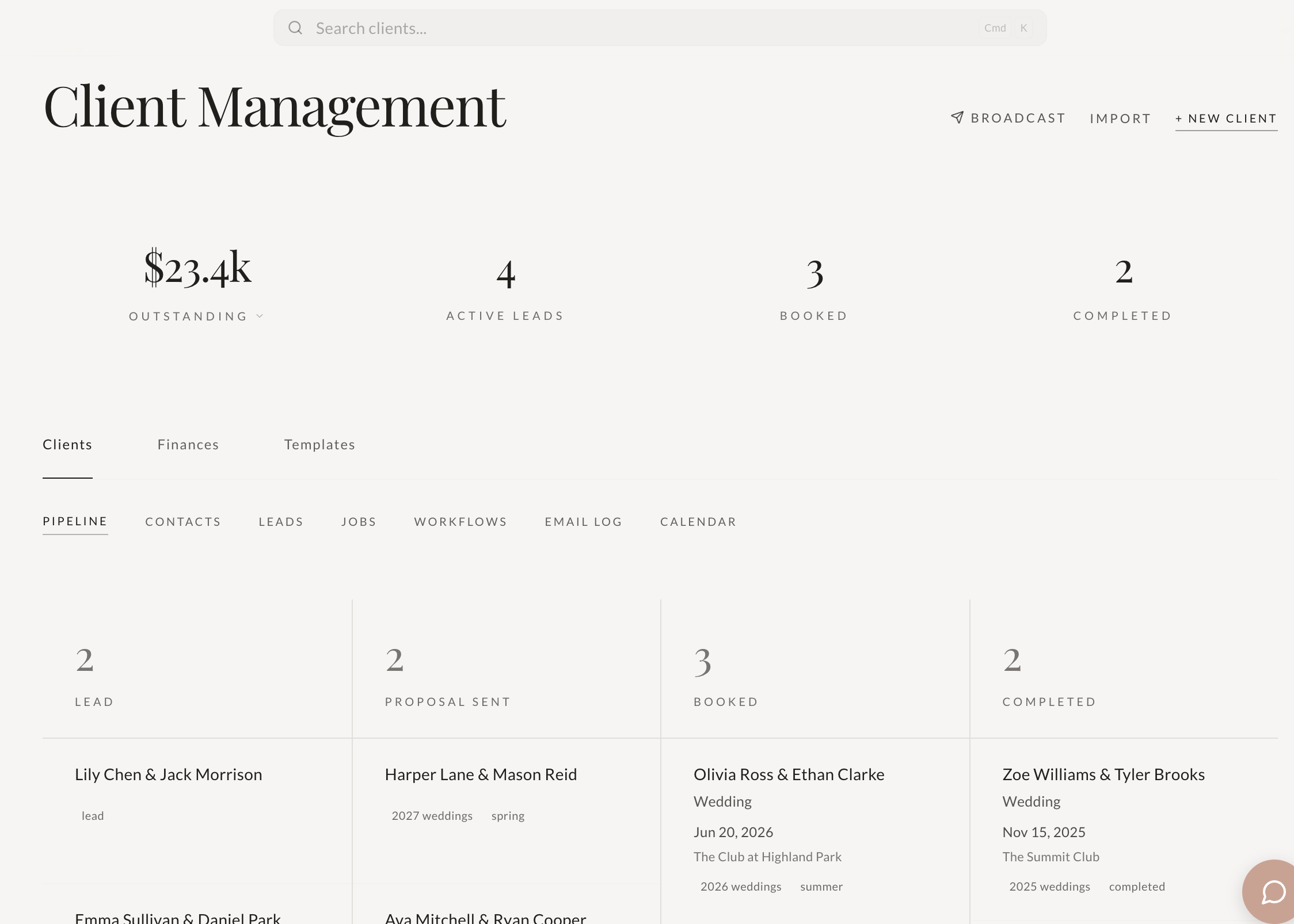
Run your whole business in one place
Timelines, clients, proposals, invoices, contracts, and payments. Colara is built for wedding planners, $99/month after a free trial.