Wedding Planning
The Complete Day-Of Wedding Coordinator Checklist
What day-of coordination really covers, organized the way working coordinators run it: four to six weeks out, wedding week, morning of, ceremony, and reception.
Colara · July 6, 2026
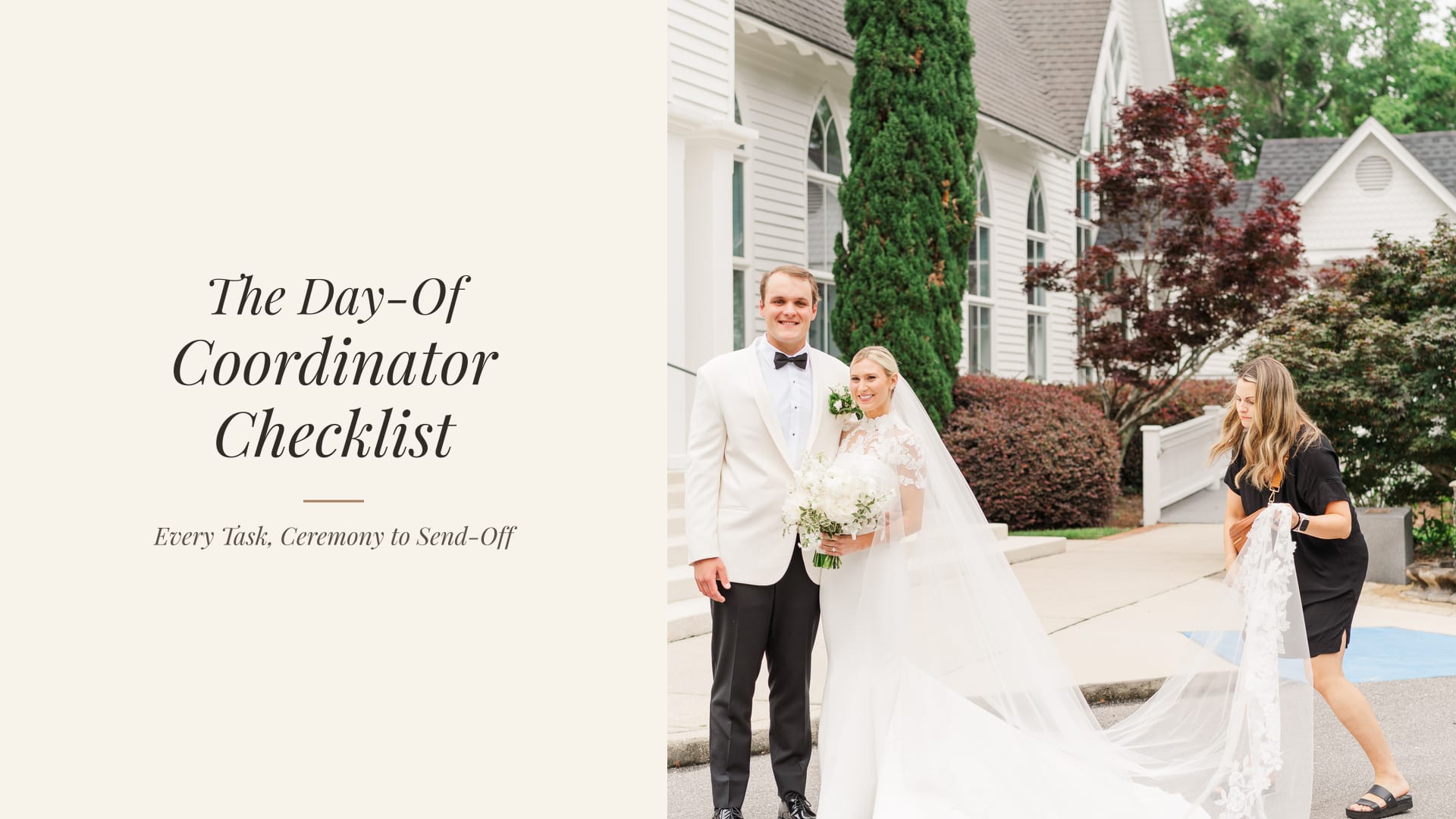
The difference between a wedding day that feels calm and one that feels chaotic is almost never the budget, the venue, or even the weather. It is whether one person is holding a complete list of what needs to happen, in order, with names attached. That person is the day-of coordinator, and this is the complete day-of wedding coordinator checklist that keeps the whole thing standing, from four to six weeks out through the final sweep.
First, an honest note about "day-of"
There is no such thing as true day-of coordination. A coordinator who shows up the morning of the wedding with no vendor contacts, no timeline, and no floor plan cannot save anyone. What couples call day-of is really month-of: the working begins four to six weeks out, when the coordinator takes over vendor communication and builds the master timeline. Every section below is organized that way.
Four to six weeks before
- Collect every signed vendor contract and read them. Note arrival times, setup requirements, meal clauses, and overtime rates.
- Introduce yourself to every vendor by email as the point of contact for wedding week.
- Build the master timeline, from vendor load-in to last-car pickup, and circulate it for sign-off. The couple, the photographer, the caterer, and the venue coordinator all need to bless the same version. If photography coverage is 8 hours, build around it: here is how an 8-hour photography timeline shapes the day.
- Walk the venue. Confirm power, staging areas, where the cake table goes, and where the couple hides before the ceremony.
- Collect the family photo list, the must-play and do-not-play music lists, and the names of every toast giver.
- Confirm the rain plan in writing, including who makes the call and by what time.
Wedding week
- Send the final timeline to every vendor and confirm receipt individually. Silence is not confirmation.
- Confirm final guest count with the caterer and rental counts against the floor plan.
- Run the rehearsal: processional order, spacing, who stands where, who holds the rings.
- Collect the marriage license, vow books, rings, and any personal items being staged, and agree on who physically carries each one to the venue.
- Prepare the emergency kit: safety pins, stain remover, fashion tape, pain reliever, sewing kit, blister pads, phone chargers, and a lighter for stubborn candles.
Morning of the wedding
- Arrive before the first vendor. Greet each one and point them to their setup area.
- Check hair and makeup progress against the timeline at the one-hour mark. This is where days fall behind, and a delay caught at 10am is fixable.
- Stage the details the photographer needs first: dress, rings, invitation suite.
- Set out escort cards, signage, guest book, and favors against your photo of the approved layout.
- Distribute personal flowers, corsages pinned, bouquets watered until the last minute.
Ceremony
- Line up the processional and cue the musicians.
- Hand off the rings and the license to the right people.
- Seat late guests at the back, quietly.
- After the recessional, guard the couple's ten minutes alone before family photos begin.
Reception
- Flip or verify the reception space while guests are at cocktail hour.
- Cue every event with the band or DJ and the photographer before it happens: entrances, first dance, toasts, parent dances, cake, bouquet, exit. The photographer should never learn about a cake cutting as it starts.
- Make sure the couple eats. Plate their food yourself if you have to.
- Settle final vendor payments and tips from the envelope the couple prepared.
- Pack the getaway car: license, gifts, card box, cake topper, leftover top tier.
- Supervise breakdown and do the final sweep. Nothing left behind but the rentals.
Run your whole business in one place
Timelines, clients, proposals, invoices, contracts, and payments. Colara is built for wedding planners, $99/month after a free trial.
Frequently asked questions
What does a day-of wedding coordinator actually do?
A day-of coordinator takes over vendor communication about a month out, builds and runs the master timeline, manages setup and cues on the wedding day, and handles every problem before the couple hears about it. The couple plans the wedding. The coordinator executes it.
How much does day-of coordination cost?
Typically $800 to $2,500 depending on the market and the coordinator's experience. If you are a planner deciding what to charge for this tier, our wedding planner pricing guide breaks down the math.
When should a day-of coordinator take over?
Four to six weeks before the wedding. Any later and they are inheriting decisions instead of confirming them. This is why most working coordinators call the service month-of coordination in their contracts.
Keep the checklist and the timeline in one place
A checklist is only as good as its connection to the clock. When the timeline shifts fifteen minutes, every cue on this list shifts with it, and a printed packet cannot update itself. Coordinators who run their weddings on Colara keep the timeline, the checklist, the vendor contacts, and the family photo list in one live workspace that everyone sees at once. Couples can start with the free timeline generator and hand their coordinator something real to build on. Either way, print two copies on the day. Phones die at weddings, usually right before the toasts.