Wedding Planning
How to Build an 8-Hour Wedding Photography Timeline (Sample Schedule Included)
A working 8-hour wedding photography timeline from a photographer who has shot hundreds of weddings, with first look and no first look versions, and the buffers most couples forget.
Jennie Tewell · July 6, 2026
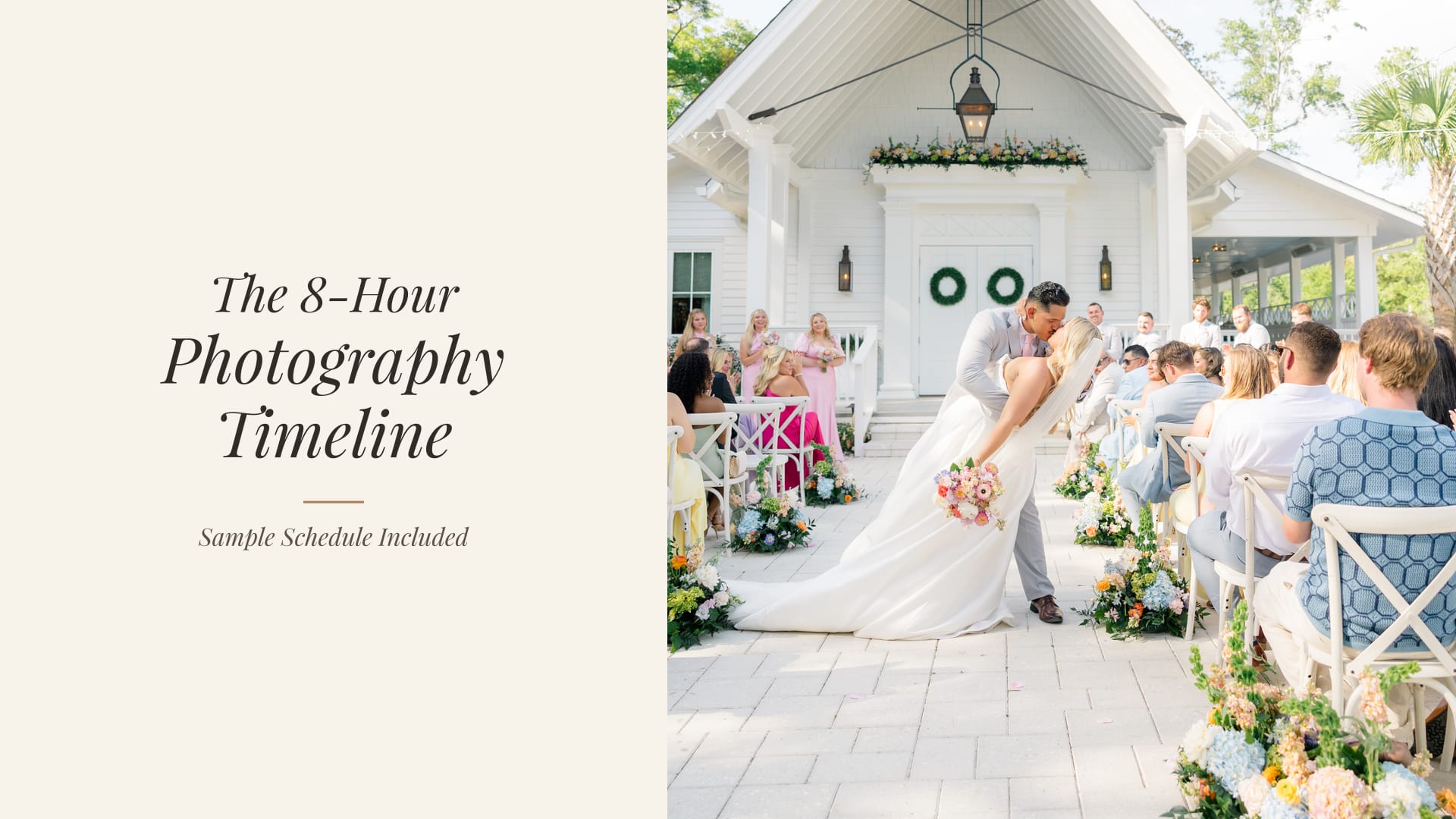
Almost every timeline problem I have seen in fifteen years of photographing weddings traces back to the same mistake: the couple built the schedule around the reception, then squeezed the photography into whatever was left. It feels logical. The reception is the party, the part with the band and the toasts and the people you love. But the photos are the part you keep, and an 8-hour wedding photography timeline only works when the day is built around light and buffer, not around the DJ's start time.
What eight hours actually covers
Eight hours is the most common photography package for a reason. It is enough to document a full wedding day, from the end of hair and makeup through the first hour or so of open dancing, as long as the ceremony lands in the mid afternoon. What it usually cannot cover is both a long getting ready session and a sparkler exit at 11pm. Something gives, and it is better to decide what gives now, on paper, than at 9:40pm when your photographer's coverage ends mid dance floor.
A sample 8-hour wedding photography timeline
This example assumes a 4:30pm ceremony, a first look, and a ceremony and reception at the same venue. It is the shape I recommend more than any other.
- 1:30pm Photography begins. Details first: dress, rings, invitation suite, shoes. Hair and makeup should be finishing, not starting.
- 2:00pm Bride gets into the dress. Mom and bridesmaids in the room, tissues nearby.
- 2:30pm First look and couple portraits. This is the calmest thirty minutes of the whole day. Protect it.
- 3:15pm Wedding party photos.
- 3:45pm Immediate family photos, then everyone disappears so guests do not see the couple.
- 4:15pm Couple tucked away. Photographer shoots the ceremony space while it is empty and finished.
- 4:30pm Ceremony.
- 5:00pm Extended family formals, then cocktail hour candids.
- 6:00pm Reception entrance, first dance, dinner service. Photographers eat when you eat.
- 7:45pm Sunset portraits, fifteen minutes, just the two of you. The best photos of the day happen here.
- 8:15pm Toasts, parent dances, cake cutting.
- 9:00pm Open dancing.
- 9:30pm Coverage ends.
No first look? Here is what changes
A first look is a choice, not a requirement, and plenty of my couples skip it. Without one, every portrait except the ceremony itself moves to the cocktail hour: couple portraits, wedding party, and family formals all compete for the same 60 to 90 minutes. It works, but three things become non negotiable. The ceremony needs to end at least two hours before sunset. The family photo list needs to be short and printed. And someone other than the couple needs to be in charge of gathering people, because "has anyone seen Uncle David" is the single biggest timeline killer in weddings. This is exactly the job a day-of coordinator exists for.
Six hours, eight hours, or ten
Six hours covers the ceremony through the major reception events if the couple gets ready close to the venue and skips the exit shot. It suits smaller weddings and shorter receptions.
Eight hours is the sweet spot for most weddings: prep, portraits, ceremony, and the reception through the first stretch of open dancing.
Ten hours earns its cost when the ceremony and reception are in different locations, when cultural or religious traditions extend the day, or when the grand exit is a priority. Travel time counts against coverage, so a twenty minute shuttle ride between venues is twenty minutes of photos you gave up.
The buffers nobody builds in
Every timeline I review as a photographer gets the same note: where is the padding? Hair and makeup runs late at roughly half of all weddings, and the delay compounds through the day. Build in a fifteen minute cushion before the first look, another before the ceremony, and assume every group photo takes three minutes, not one. A timeline that looks slightly too relaxed on paper is exactly right in real life.
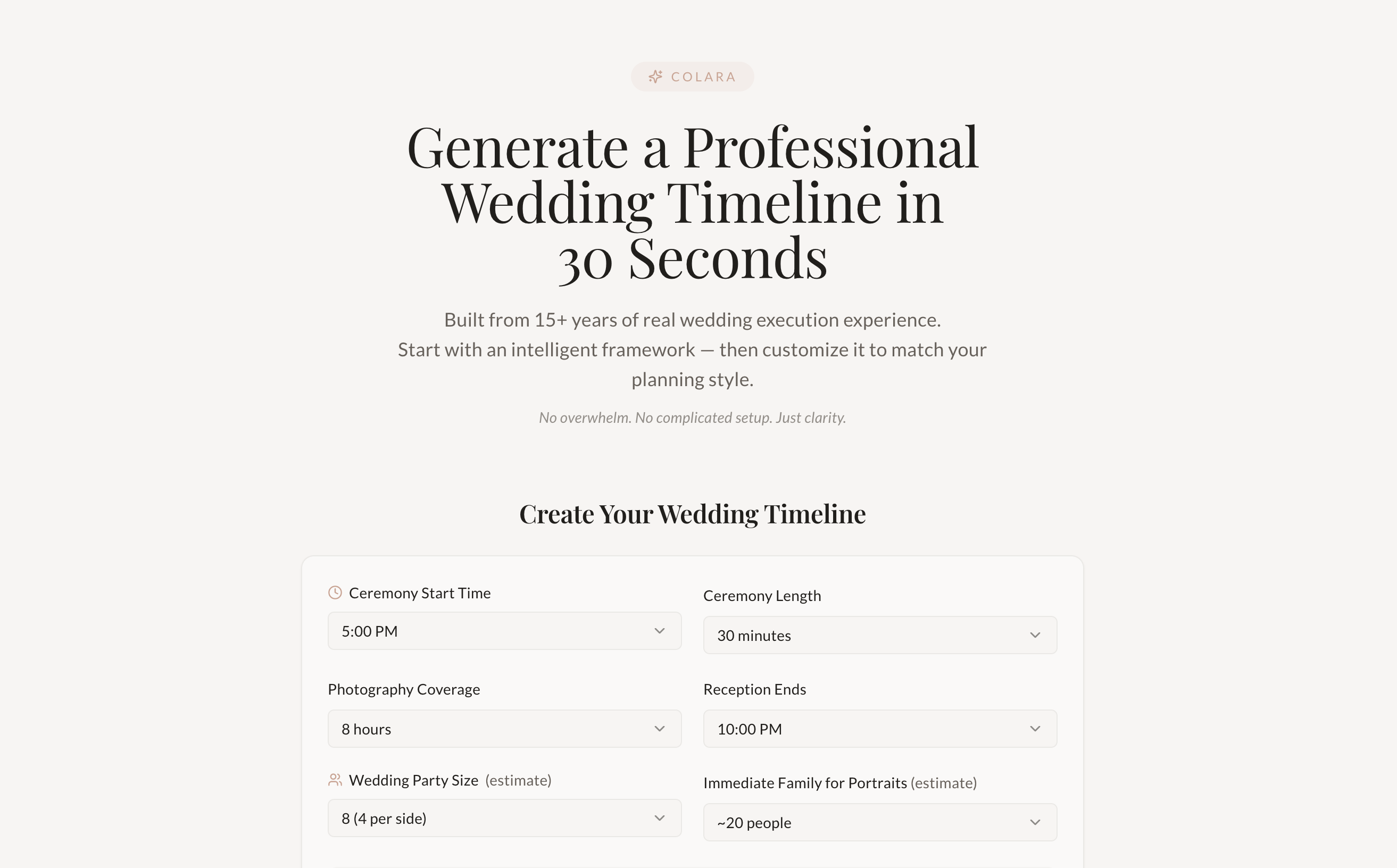
Build your wedding day timeline in 30 seconds
Answer a few questions and get a complete, realistic timeline you can edit and share. Free, no account needed.
Frequently asked questions
Is 8 hours of wedding photography enough?
For most weddings, yes. Eight hours covers getting ready through the first hour of open dancing when the ceremony falls between 3:30 and 4:30pm and everything happens at one venue. It gets tight when the ceremony and reception are in different locations, when there is no first look, or when a late-night exit shot matters to you.
What time should the ceremony start for an 8-hour timeline?
Mid afternoon, roughly two hours before sunset. That leaves room for family formals and cocktail hour candids after the ceremony and still catches golden hour for couple portraits. A 6pm summer ceremony or a 2pm winter one both fight the light.
When does wedding photography coverage usually start?
About three hours before the ceremony: early enough to catch the end of hair and makeup, the details, and the first look, but not so early that you pay for two hours of curling irons.
Build yours in thirty seconds
You can lay all of this out on a spreadsheet, or you can let the math happen for you. The free Colara timeline generator builds a complete wedding day schedule around your ceremony time, sunset, and coverage hours, using the same formulas planners and photographers use. Adjust it, share it with your vendors, and stop guessing whether 4:30 is too late. If you are working through family photo groupings too, the family photo checklist generator pairs with it.